In the very first month of 2006, E. began learning to read. He was three-and-a-half-years-old. Right before we really got going, I read Charlotte Mason’s opinion that children should be given books right from the start, that there would be nothing more satisfying than to put each lesson into action immediately. Around the same time, I read a post that Cindy wrote saying that she rewarded her children after they had read their first one hundred books. All of this is to say that reading lessons meant reading books from the very beginning. I kept a list, and, by the end of 2008, E. had read one hundred books and earned the right to a Trip With Dad, to be taken in the spring when the weather is a bit better.
Today, I’m going to share the list of the one hundred books.
For starters, there are Bob Books, which begin from the very first lesson. A child only has to know four sounds in order to read the first book.
 |
| Bob Books: Set 1 |
 |
| Bob Books: Set 2 |
 |
| Bob Books: Set 3 |
 |
| Bob Books: Set 4 |
 |
| Bob Books: Set 5 |
Five sets means that alone is the first forty books. By the time a child is through Bob Books, they are right at easy-reader level. However, our last Bob Book was actually number fifty-four, and that is because I threw in a few works that fit within the Bob Books level, sometimes because E. asked, and sometimes because I wanted to. Among these are some traditional children’s tales which I printed off and placed in a binder, courtesy of The Baldwin Project. These included The Boy and the Goat, Chicken Little, and The Little Red Hen.
This also means we read:
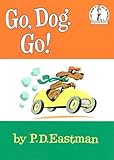 |
| Go, Dog, Go! |
 I. hate. this. book. It is not only the farthest possible thing from literature, it also has no plot.
No. Plot.
However, comma.
Kids love this book. Early on, it is important to woo them. Therefore, we read this book.
Over and over until my brain bled.
But I digress.
After leaving Bob Books behind, we moved on to the Billy and Blaze series:
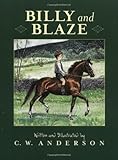 |
| Billy and Blaze |
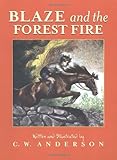 |
| Blaze and the Forest Fire |
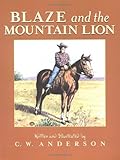 |
| Blaze and the Mountain Lion |
 |
| Love You Forever |
 |
| Blaze and the Lost Quarry |
 |
| Blaze and the Gray Spotted Pony |
 |
| Fantastic Frogs |
 |
| Blaze and Thunderbolt |
 |
| Blaze Finds the Trail |
 |
| Blaze Shows the Way |
Okay, so I know there were a couple extras thrown in there. The book about frogs was a gift from my sister. It was actually very informative for an easy reader. The Love You Forever book was something he picked up and asked to read. I allowed him to. He logically pointed out that a boy that naughty and that unrepentant would be unlikely to grow up to be a nice person the way the book said. Of course, he said this in his own baby way, but that was the gist of the conversation. All children do naughty things like the boy in the story; the problem is the lack of correction. I don’t know why that book is so popular. The longer I am a parent, the less I like it.
Ahem.
So by now we had completed 64 books. All of them were read aloud. Very few were read in one sitting. Most, I required he read twice. Once to learn, the second to flow with and better comprehend. When necessary, I had gone through the book in advance and given lessons on the white board specific to what we were reading that day.
I always required that he read a book at or above his current ability in order to receive “credit” on the chart. This way, we didn’t get stuck in easy readers for a year, but he was still able to read simple books as often as he liked. My goal has always been for him to acquire a taste for truly good literature. Easy readers reinforce reading, but they do not teach good taste, nor do they encourage advanced reading skills, etc. My opinion so far is that one should try to get past that level of reading as quickly as possible. I say this knowing full well that I am sure to have at least one student who gets “stuck” in said level.
From here, we went back a step because E. began to struggle a bit and frankly, I had forgotten all about Frog and Toad and a child just shouldn’t learn to read without reading Frog and Toad! Frog and Toad is the ultimate standard for easy readers and everything I just said about this level of reading doesn’t apply to much of anything written by Arnold Lobel.
 |
| Frog and Toad Are Friends |
 |
| Days with Frog and Toad |

From here, I did a combination of Nate the Great and more Arnold Lobel:
 |
| Nate the Great |
 |
Nate the Great
Saves the King of Sweden |
 |
| Small Pig |
 |
| Mouse Tales |
 |
| Uncle Elephant |
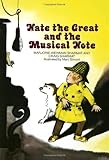 |
Nate the Great
and the Musical Note |
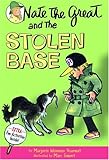 |
Nate the Great
and the Stolen Base |
After that, we simply slowly moved through books we had in our library, trying to advance his ability a bit with each book. It helps that he’s sort of hyperlexic.
About halfway through this, I began to allow him to read the books on his own. This means that he didn’t have to read the entire book aloud in order to get “credit” on his chart. He had proven he was capable, and he had also proven that I was slowing him down because as the books got longer, it became harder and harder to get it read (out loud) in a reasonable amount of time. Once we allowed this, Si expressed concern that he might be reading too fast, so we began to require him to keep a list of words he didn’t know with corresponding page numbers so that we could go back and build vocabulary together.
These books below, by the way, he has now read over and over. He is a rereader, just like his Auntie MPL.
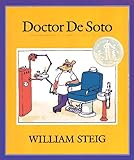 |
| Doctor De Soto |
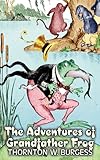 |
The Adventures of
Grandfather Frog |
 |
| You Can Do It, Same |
Next was some text book on amphibians and reptiles that he slowly and painfully read aloud to me for what seemed like a year, every single night while I made dinner. Then, he quizzed me on the details of the little critters. More than once, I had to admit my lack of comprehension.
It was totally embarrassing.
 |
| The Boxcar Children |
 |
| The Deserted Library Mystery |
 |
| The Story of Doctor Dolittle |
 |
| Little House in the Big Woods |
 |
| Stuart Little |
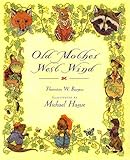 |
| Old Mother West Wind |
 |
| By the Shores of Silver Lake |
 |
| The Long Winter |
 |
| On the Banks of Plum Creek |
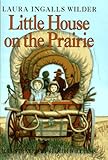 |
| Little House on the Prairie |
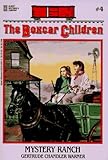 |
| Mystery Ranch |
 |
| The Story of Benjamin Franklin |
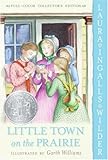 |
| Little Town on the Prairie |
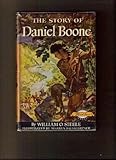 |
| The Story of Daniel Boone |
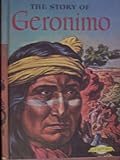 |
| The Story of Geronimo |
Enid Meadowcroft’s The Story of Davey Crockett
 |
| The Story of Buffalo Bill |
Margaret Leighton’s The Story of General Custer
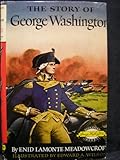 |
| The Story of George Washington |
 |
| Mr. Bell Invents the Telephone |
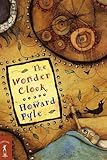 |
| The Wonder Clock |
 |
| Charlotte’s Web |
 |
| Richard of Jamestown |
 And that’s all. For the list, at least. And, yes, he read Farmer Boy, and no, I don’t know why it isn’t on the list. That was his favorite one and he read it over and over. All I can think is that I neglected to write it down. Life is more an art than a science, is it not?
Now, I am constantly adding to his book stack. Pretty much every book we read aloud as a family is then placed in a pile from which he can choose a book to read. For now, I prefer that he hear the book aloud before reading it on his own. My hunch is that this enhances his comprehension because he has heard the book in an adult voice, which is to say a voice that expresses comprehension. Hopefully, this is training the voice inside his head to mature.


6 Comments